Living on the Pacific NW coast brings its share of beauty and ruggedness, desolation and introversion. Some can hack it, some can’t. For my part, having experienced the stormy extremes of weather on the Oregon coast, I have joined the ranks of the fair weather coasties. Though I consider myself pretty independent, there is a deep loneliness that chills my bones more than the weather does. But I can’t overlook what living near the sea has taught me, and shared of its secrets.
Everyone sees the gulls collecting on the beach all year long. In the summer, flocks of pelicans return. Maybe some birders notice the black and white murres, and long necked cormorants. And of course everyone hopes to catch a glimpse of the famous Haystack Rock puffins, which are hard to sight. The tide pools are a treat for kids and adults alike. But what we bring to the beach is often associated with its own destruction. We bring noise, garbage which finds its way into the ocean as microplastics, we bring dogs that disturb the nesting birds, and careless humans who pull sea stars or mussels off their rocks and step on anemones while we’re making our memories. It makes me wince, because the same awesomeness that brought me to the coast, brings millions of others, many who eventually hire developers to tear down the dunes and construct their beach front dream house with picture windows.
The businesses that thrive in Cannon Beach are all about bringing more tourists here: restaurants, shops, bike and surfboard rentals, contractors, housekeepers and gardeners all trying to keep the tourists happy. Nature and humanity struggle all over the world to find that sweet spot of balance. Enough exposure and access for all people to get out of the city and enjoy the peace and tranquility of nature, while setting limits on where humans can go and what activities they are allowed to pursue.
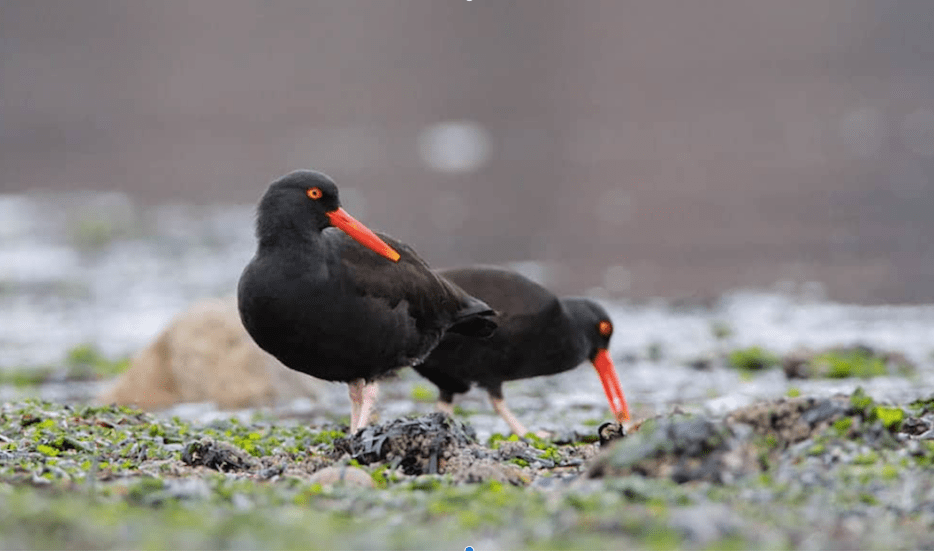
I became more in tune with the tides, the seasons and how climate affects the coast when I started volunteering to monitor the nesting behavior of the elusive black oystercatcher. Both males and females are completely black, except for distinctly orange eyes and bills. Their unique call often alerts you to their presence beginning as a high peeping sound that descends in pitch like a moving train. In spite of their name, black oystercatchers prefer mussels and other mollusks to oysters, and are often seen foraging at the tidal zone of rocks.
Birdwatching takes a lot of patience anyway, but finding these birds’ nests requires extra dedication. Their nests are called “scrapes”, which are basically dips in the black rocks that keep them well camouflaged. Incubation can last from 25-32 days. Throughout the nesting and nurturing of chicks, these birds are egalitarian parents. If you’re lucky. you can witness the changing of the guards as one bird gets off the nest to go foraging while its partner changes places.
Why should we give them any special attention? Human activity has been closely linked with the reproductive failure of these and many other rocky shore birds. Black oystercatchers are a species of concern, and an indicator of intertidal habitat health. Population numbers have fluctuated over the years, due to many factors, including climate change’s effects on shellfish. They are easily disturbed by barking dogs, people climbing cliffs, recreational drones, and interloping raptors and gulls which may steal eggs and chicks. These highly sensitive birds may abandon their nests when stressed. Based on data from the US Fish & Wildlife Service and the Bird Alliance of Oregon since 2015, only 69% of oystercatcher nests hatch one chick, and only 34% actually fledge.
In Cannon Beach, you can spot oystercatchers nesting at different locations. A couple of weeks ago, a birdwatching friend and I went out to Indian Beach, in Ecola State Park, to monitor a couple of nests. At the southern end is a rock which we call Submarine Rock, where a couple of chicks hatched a few weeks ago. Fledging can take up to 40 days. We were able to see the young birds hopping around the rock, at a distance from the original nest, which was a good sign that they might have been spreading their wings. We joked about millennial kids who have it too good in their parents’ basement to bother moving out. Just as we were about to give up and put away our binoculars, we saw both teenage oystercatchers take flight. Two more birds survived the obstacles and graduated into adulthood! We gave each other a high five.
 Not All Who Wander Are Lost
Leave a comment